North Macedonia Travel Guide 2026
Plan your trip to North Macedonia in 2026: Skopje, Ohrid, Lake Ohrid, food, budget tips, and how to get around this affordable Balkan destination.
Cities & regions
Country guides
Upcoming Events in North Macedonia
- Ohrid Summer Festival
ohrid
Long-running classical music and arts festival set against the backdrop of Lake Ohrid and the city's UNESCO-listed monuments, with concerts at open-air venues throughout the old town.
Kraftwerk — Open-Air Concert
skopje
Open-air performance by German electronic pioneers Kraftwerk at ARM Stadium in Skopje, part of their ongoing 3-D Concert Tour.
- MakeDox Creative Documentary Film Festival
skopje
The 17th edition of Skopje's documentary film festival with competitive sections for feature, student, and short docs, plus travelling cinema events in Macedonian villages.
North Macedonia is a small, landlocked Balkan country of roughly 2.1 million people and 25,713 km², bordered by Kosovo, Serbia, Bulgaria, Greece, and Albania. The capital is Skopje. It joined NATO in 2020 and is negotiating EU accession. Currency: Macedonian denar (MKD), approximately 58 MKD = 1 €.
What North Macedonia is known for
- Lake Ohrid — one of Europe’s oldest and deepest lakes, UNESCO-listed, on the Albanian border
- A mix of Orthodox Christian and Islamic influences reflected in churches, mosques, and food
- Low prices by European standards — budget travellers can get by on €7–12/day all-in
Capital city: Skopje
Skopje survived a devastating 1963 earthquake and then a “Skopje 2014” monumental building spree that added dozens of neoclassical statues and facades to the downtown. Today the city functions as a modern-and-Ottoman mashup: new bridges and marble plazas face the Ottoman-era Old Bazaar (Stara Čaršija) across the Vardar River.
Key Skopje sights:
- Macedonia Square — Warrior on Horse statue, Porta Macedonia arch, government buildings
- Stone Bridge — pedestrian crossing linking the new city to the Old Bazaar
- Kale Fortress — hilltop Ottoman fortress with panoramic views (100–150 MKD entry, ≈€1.7–2.6)
- Old Bazaar — cobbled lanes, Mustafa Pasha Mosque, Isa Bey Mosque, kafanas and craft shops
- Matka Canyon — boat and kayak tours just outside the city (tours from €30–45)
- Vodno Mountain — cable car up to the Millennium Cross (150–250 MKD, ≈€2.6–4.3)
See our Skopje city guide for the full breakdown.
Ohrid: North Macedonia’s standout destination
Ohrid sits on the northeastern shore of Lake Ohrid — 34 km long, over 300 m deep, and home to endemic fish species. The town is UNESCO-listed for both its cultural heritage (over 360 Orthodox churches and chapels) and natural value.
Key Ohrid sights:
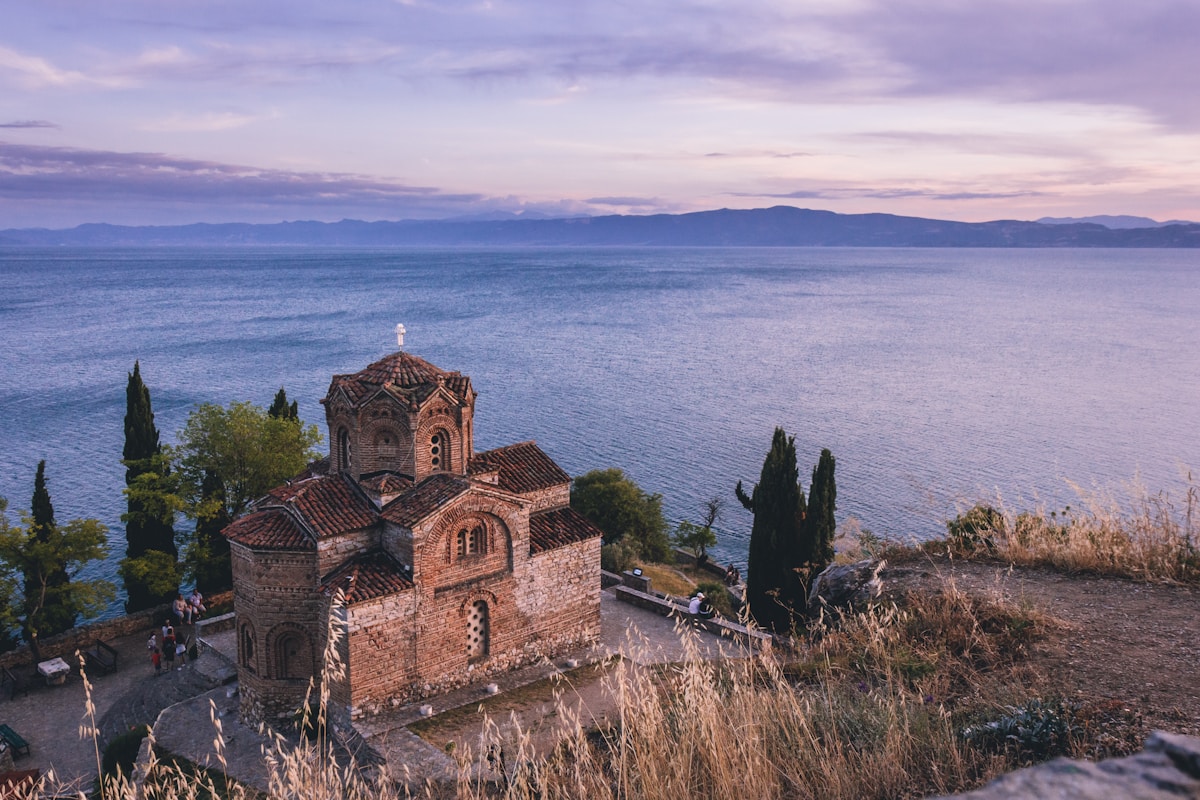
- St John Kaneo Church — the iconic cliffside church above the water
- Tsar Samuel’s Fortress — hilltop ramparts with panoramic lake views
- Church of Saint Sophia — medieval frescoes, listed on the national banknote
- Bay of Bones archaeological museum — built on wooden stilts over the lake
- Boat trips to Saint Naum Monastery (30 km south, 3–5 hours round-trip)
See our Ohrid travel guide.
Other destinations
Bitola — large southern city with Ottoman buildings and a relaxed, café-heavy pace. Known as “Manastir” in Ottoman-era references.
Krusevo — North Macedonia’s highest town, mountain atmosphere, Ilinden-related monuments.
Mount Korab — highest peak in North Macedonia, a serious hiking and scrambling destination.
Typical 2026 daily costs
| Budget level | Daily total (per person) | What it covers |
|---|---|---|
| Low-end | 400–700 MKD (≈€6.8–12) | Hostel/guesthouse, local buses, cheap eats |
| Mid-range | 800–1,400 MKD (≈€13.7–24) | Hotel room, sit-down meals, some activities |
Food is one of the biggest value points: a main dish in a kafana costs 90–180 MKD (≈€1.5–3), and burek from a bakery runs 40–80 MKD (≈€0.7–1.4).
Getting here and getting around
Airports: Skopje International (SKP) and Ohrid “St Paul the Apostle” (OHD) — budget airlines connect to European hubs in summer.
Ground transport: Buses connect Skopje, Ohrid, Bitola, and Krusevo reliably. A circular Skopje → Krusevo → Ohrid → Bitola → Skopje loop is fully doable by bus without a car.
Practical tips
- Best time to visit: Late May–September for warm weather and lake activities; October–November quieter and good for hiking
- Language: Macedonian (official); Albanian widely spoken in the west; English works well in tourist areas
- Visa: Most EU, UK, US, and Australian nationals do not need a visa for stays under 90 days — verify with your government before travel