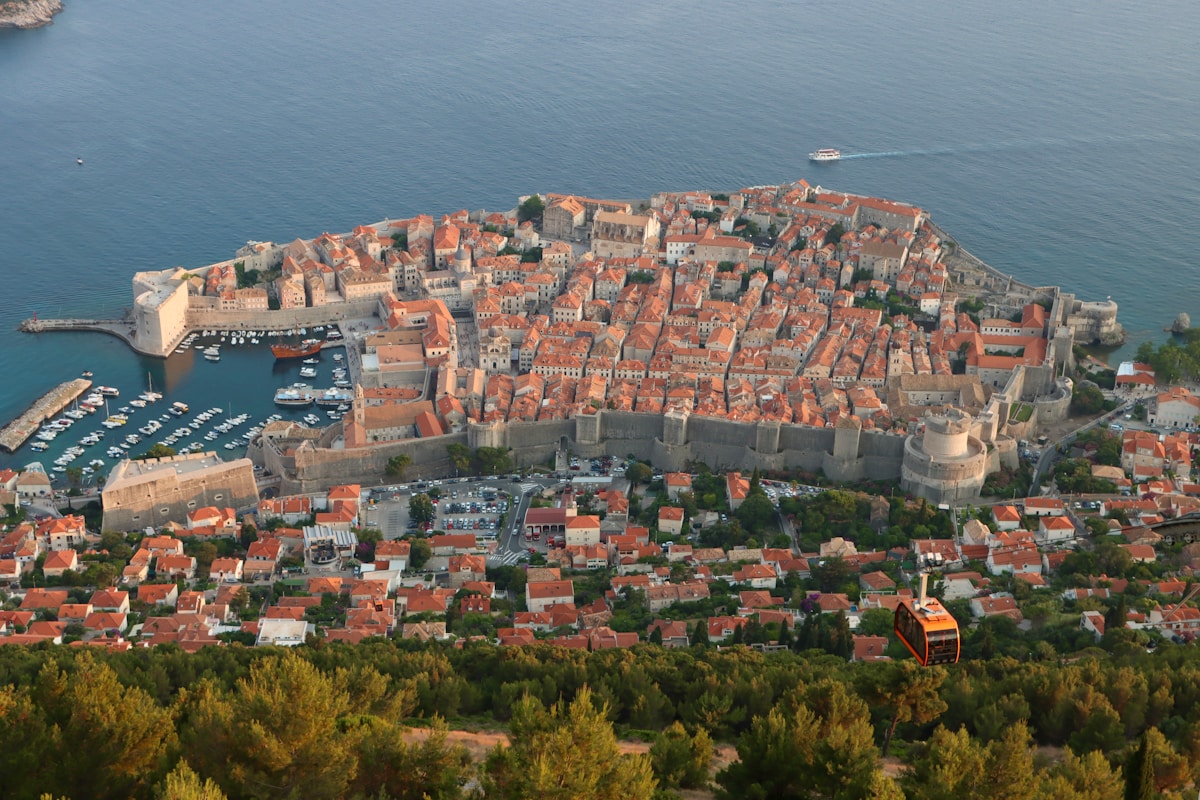
Dubrovnik Travel Guide: City Walls, Old Town & Elafiti Islands
Dubrovnik travel guide: medieval city walls, Old Town sights, Game of Thrones locations, cable car, and Elafiti Islands - prices in euros.
Guides for Dubrovnik: Game of Thrones City
Dubrovnik is the most visited city in Croatia and one of the most recognisable walled cities in Europe. The medieval fortifications, limestone streets, and Adriatic setting are exceptional - but so are the crowds in July and August. Plan accordingly, arrive early, and consider shoulder season (May, June, September) for a markedly better experience. All prices in euros (€).
What to see and do
- Walk the city walls (€30–35) - the essential Dubrovnik experience: 2km of fortifications with sea views on one side and the terracotta rooftops of the Old Town on the other
- Mt. Srđ cable car (€25–35) - the best panoramic view of the city and coastline
- Stradun - the main limestone street through the Old Town; free to walk
- Lokrum Island ferry (€10–15) - 10 minutes by boat from the Old Town harbour; peacocks, a botanical garden, and a saltwater lake
- Fort Lovrijenac (€10–15) - a free-standing fortress outside the city walls used as the Red Keep in Game of Thrones
- Elafiti Islands boat trip (€40–90) - a day trip to the three islands immediately west of Dubrovnik (island hopping guide)
- Kayaking around the walls (€40–60)
Neighbourhoods
Old Town - the walled city; the most atmospheric place to stay but also the most expensive and busiest.
Ploče - just east of the Old Town, quieter with luxury hotels and sea views. Walking distance to the walls.
Lapad Peninsula - 3km west of the Old Town by bus (€2), with larger hotels, a beach, and a more relaxed pace. Good option for families and those watching costs.
Gruž - the main port and ferry terminal, 4km from the Old Town. More local, less touristy; some good restaurants.
Food and drink
Dubrovnik food is Dalmatian in character: fresh seafood, black risotto (crni rižot), peka (ordered in advance), and pašticada. Šporki makaruli - pasta with a spiced meat sauce - is the city’s own specific speciality.
The Old Town has a restaurant on every corner; quality is variable and prices are high by Croatian standards. The better value is in Gruž and Lapad.
Where to stay
Dubrovnik accommodation ranges from Ploče area luxury hotels to budget guesthouses on the Lapad Peninsula. Prices are among the highest in Croatia - significantly more than Split or Zadar.
Getting there and around
- Airport: Dubrovnik Airport (DBV), 20km from the city. Bus to Pile Gate: €7–10; taxi: €30–40. A pre-booked private transfer costs a similar amount to a taxi and removes the uncertainty of finding one on arrival.
- Bus: Buses run along the coast to Split (4.5 hours), Mostar (3–4 hours via Bosnia), and Kotor (2–3 hours via Montenegro)
- Driving: Parking within or near the Old Town is extremely limited; use park-and-ride
Practical notes
- Book ahead: Hotels in July–August book out months in advance
- Arrive early: The city walls and Stradun are significantly more pleasant before 10am
- Day-tripper crowds: Cruise ships arrive midday - mornings and evenings are calmer
- Day trips: Montenegro’s Bay of Kotor (2 hours), Mostar in Bosnia (3 hours), and the Elafiti Islands are all feasible day trips
Dubrovnik guides
- Things to do in Dubrovnik
- Best tours in Dubrovnik
- Best restaurants in Dubrovnik
- Best hotels in Dubrovnik
- Vegan food in Dubrovnik
- Best cafés to work in Dubrovnik
- Food tours in Dubrovnik
- Dubrovnik island hopping guide
Book activities: GetYourGuide has the widest selection of Dubrovnik tours, from wall walks to island boat trips.
Book an experience
Top experiences in Dubrovnik: Game of Thrones City
Explore the best tours and activities in Dubrovnik: Game of Thrones City - instant confirmation, free cancellation on most bookings.