Best National Parks in the Balkans 2026: Hike, Wildlife & Nature
Book an experience
Book this activity
These are the top-rated activities for this area — book ahead to lock in your preferred date.
Contents
- Albania
- Theth National Park
- Lake Shkodra / Skadar (shared with Montenegro)
- Prokletije / Bjeshkët e Nemuna
- Bosnia and Herzegovina
- Sutjeska National Park
- Vjetrenica Cave System
- Bulgaria
- Rila National Park
- Pirin National Park
- Central Balkan National Park
- Croatia
- Plitvice Lakes National Park
- Krka National Park
- Brijuni National Park
- Montenegro
- Durmitor National Park
- Lake Skadar National Park
- Lovćen National Park
- Biogradska Gora National Park
- North Macedonia
- Mavrovo National Park
- Galichica National Park
- Serbia
- Đerdap (Iron Gates) National Park
- Tara National Park
- Slovenia
- Triglav National Park
- Best national parks by travel style
The Balkans rarely get the same headline treatment as the Alps or Scandinavia for protected areas — which means the parks here feel dramatically undervisited for their quality. From the karst lakes of Croatia to the ancient forests of Bosnia, the alpine wilderness of the Albanian Alps, and the glacier-sculpted peaks of Montenegro, the region packs some of the most diverse protected landscapes in Europe.
This guide covers the strongest national parks across the Balkans by country, with notes on what each does best so you can match the right park to your trip.
Albania
Theth National Park
Theth sits in the heart of the Albanian Alps with jagged karst peaks, deep valleys, and remote villages that feel completely removed from modern tourism. Trails run through beech forest to sharp summits and hidden waterfalls. A 1,200-metre zipline over the village adds an adrenaline option to the hiking.
Best for: hikers who want real mountain scenery without Alpine crowds, and multi-day mountain-and-villages trips.
Lake Shkodra / Skadar (shared with Montenegro)
The largest lake in the Balkans is one of Europe’s most important wetland habitats. The Albanian side protects vast reedbeds, lily-pad fields, and waterbird colonies. Accessible from Shkodër.
Best for: birdwatchers, kayakers doing small-boat trips through reed channels, and accessible day trips from the northern Albania coast.
Prokletije / Bjeshkët e Nemuna
Prokletije spans the border regions of Albania, Kosovo, and Montenegro — a true cross-border wilderness with plunging canyons, high passes, and ancient forest. In Kosovo it is called Bjeshkët e Nemuna. Both sides share the character of one of Europe’s last real karst frontiers.
Best for: serious multi-day hikers on the Peaks of the Balkans trail, travellers interested in the cultural edge between three countries.
Bosnia and Herzegovina
Sutjeska National Park
Sutjeska is regularly described as the “Yosemite of Europe” for combining deep river valleys, the tallest peak in Bosnia — Mount Maglić (2,386 m) — and one of Europe’s last genuine primeval forests, Perućica. The infrastructure is less polished than Croatia’s parks, but the wilderness is more authentic.
Best for: hikers who want primeval forest and real Balkan wilderness, not the manicured boardwalk experience.
Vjetrenica Cave System
Vjetrenica is a massive cave system in the Dinaric Alps — a special natural reserve rather than a standard park. Famous for complex passages, underground rivers, and cave fauna found nowhere else.
Best for: guided cave visits as a niche add-on to a Bosnia road trip that already includes Sutjeska.
Bulgaria
Rila National Park
Rila is home to Musala (2,925 m), the highest peak in the Balkans, and the Seven Rila Lakes — a chain of glacial lakes that anchor some of the best-known hiking in Bulgaria. Rila Monastery, a major cultural landmark, sits within the park boundary.
Best for: hikers chasing the “highest in the Balkans” ascent, moderate-to-strenuous day-hikes around the Seven Lakes circuit.
Pirin National Park
Pirin trades some of Rila’s altitude for stunning high-alpine landscapes: cliffs, marble-like rock faces, and edelweiss in season. Sometimes rated the most visually impressive of Bulgaria’s three main mountain parks.
Best for: alpine-style hikers who love ridgelines and panoramic views with slightly fewer crowds than Rila.
Central Balkan National Park
Central Balkan covers a large section of the Stara Planina range and is known for deep forest canyons, waterfalls including Raysko Praskalo — one of the tallest in the Balkans — and dense broadleaf forest.
Best for: forest-and-river hikers who want Balkan mountain atmosphere without high-altitude demands.
Croatia
Plitvice Lakes National Park
Plitvice is the image most people already have in mind for Balkan national parks: 16 crystal-clear lakes connected by a web of waterfalls and wooden walkways. It is a UNESCO World Heritage Site, one of the most visited parks in Europe, and genuinely worth the crowds in spring and autumn when they thin.
Best for: first-time Balkans visitors who want a single wow-factor park, families and casual walkers, photographers.
Krka National Park
Krka, near Šibenik, is built around seven waterfalls along the Krka River. Less famous than Plitvice but easier to reach from the coast and less packed outside peak summer.
Best for: coastal-based visitors wanting a manageable day-trip park, swimming (where permitted), and a touch of local history via the riverside watermills.
Brijuni National Park
Brijuni is a small archipelago park near Pula — more about relaxed island energy and open-air museum history (it was Tito’s summer retreat) than raw wilderness.
Best for: coastal culture travellers wanting a low-effort park day with historical interest.
Montenegro
Durmitor National Park
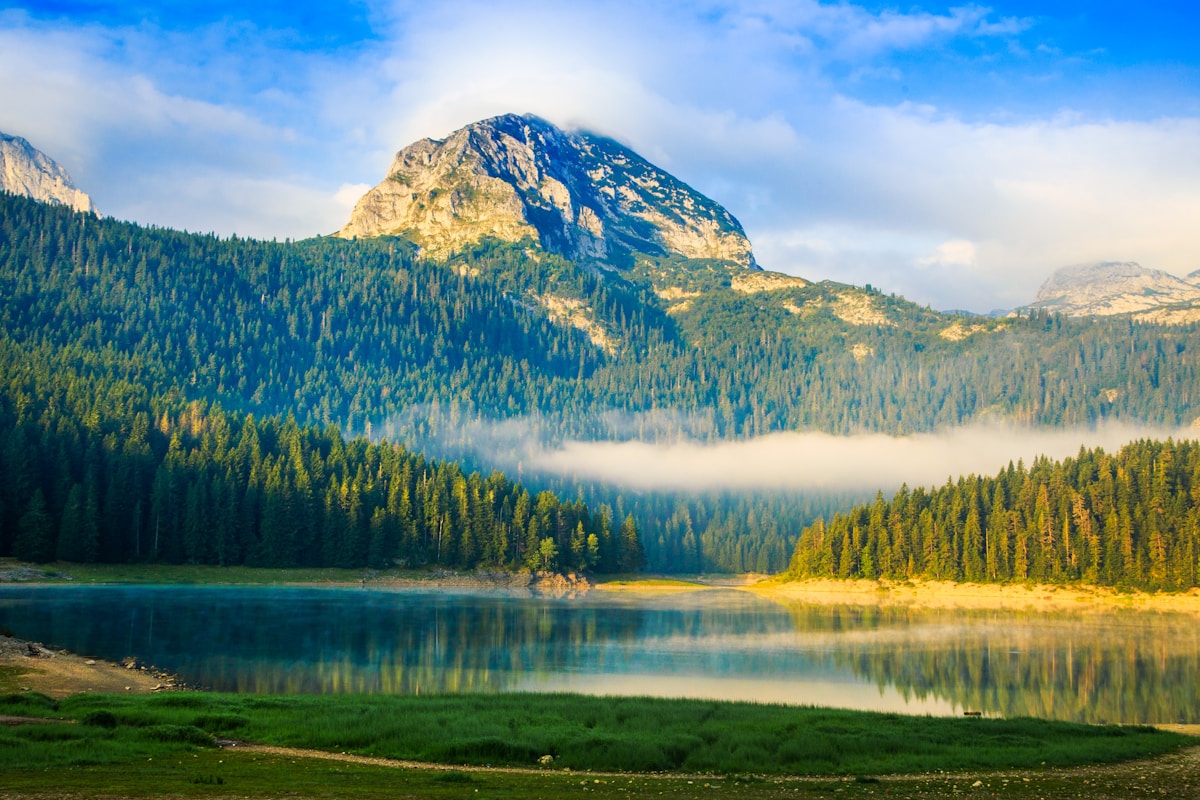
Durmitor is Montenegro’s flagship park: dozens of peaks over 2,000 m, glacial lakes including the Black Lake (Crno Jezero), and the Tara Canyon — one of the deepest river canyons in Europe. The park combines ski-season mountain terrain with rafting and forest-lake relaxation.
Best for: multi-day hikers, rafters on the Tara River, people wanting the strongest all-round mountain-and-canyon park in the Western Balkans.
Lake Skadar National Park
As the largest lake in the Balkans and one of Europe’s most important wetland areas, Lake Skadar protects reedbeds, islets, and bird colonies hosting herons, pelicans, and rare species. The Montenegrin side is particularly accessible.
Best for: birdwatchers, kayakers, boat tours through lily pads and reed channels, and a relaxed scenic day without heavy hiking.
Lovćen National Park
Lovćen rises steeply from the coast above Kotor and is crowned by the Njegoš Mausoleum — a monument to Montenegro’s poet-prince with panoramic views over the Bay of Kotor. The drive and short summit walk are among the most atmospheric experiences on a Kotor-area trip.
Best for: coastal visitors wanting a compact, high-impact park with cultural and scenic payoff.
Biogradska Gora National Park
Biogradska Gora protects one of the last old-growth forests in Europe — a quiet, shaded reserve with a small central lake that is one of the most peaceful spots in Montenegro.
Best for: older or less-mobile visitors, forest walkers, and people building a wider Montenegro nature trip around Durmitor and Lake Skadar.
North Macedonia
Mavrovo National Park
Mavrovo is North Macedonia’s largest national park and the main winter-sport hub, with a large artificial lake, varied altitude, and a mix of ski tourism in winter and hiking in summer.
Best for: ski-trip visitors, nature lovers comfortable with a mix of infrastructure and protected land.
Galichica National Park
Galichica sits between Lake Ohrid and Lake Prespa, giving it a “mountain between two lakes” setting unlike anywhere else in the region.
Best for: day hikes with strong lake views, pairing an Ohrid visit with a short-to-medium mountain walk.
Serbia
Đerdap (Iron Gates) National Park
Đerdap protects the Danube Gorge, where Europe’s largest river cuts through a dramatic limestone canyon. One of the most impressive canyon parks in the region.
Best for: visitors who like river-gorge scenery and layered cultural history along the Danube, boat tours.
Tara National Park
Tara in western Serbia is known for dense forests, the Drina Canyon, and a quieter feel than the more publicised Balkan parks.
Best for: hikers wanting a lesser-known but still rugged wilderness, forest-cover and river-gorge viewpoints.
Slovenia
Triglav National Park
Triglav straddles the Julian Alps and protects Slovenia’s highest peak, with full alpine infrastructure: marked trails, mountain huts, and classic alpine passes. Technically in Slovenia rather than the Western Balkans, but the natural anchor for any Balkans-to-Central Europe tour.
Best for: alpine hiking enthusiasts, mountain hut trips, a “finishing point” on a Balkans nature circuit.
Best national parks by travel style
| Travel style | Best parks |
|---|---|
| Classic wow-factor | Plitvice Lakes, Durmitor |
| Alpine hiking | Triglav, Rila, Pirin, Theth |
| Ancient forest / wilderness | Sutjeska, Biogradska Gora |
| Birdwatching and wildlife | Lake Skadar, Prokletije |
| Day trip from the coast | Krka, Lovćen, Brijuni |
| River canyons | Đerdap, Tara, Sutjeska |
Frequently Asked Questions
- What is the most famous national park in the Balkans?
- Plitvice Lakes in Croatia is the most visited and globally recognised. For a more remote and wilderness feel, Durmitor in Montenegro or Sutjeska in Bosnia are stronger picks.
- Which Balkan national park is best for hiking?
- Triglav for alpine hiking, Theth or Prokletije for multi-day mountain treks, Rila or Pirin for high-summit days, and Sutjeska for forest-wilderness routes.
- Can you visit multiple Balkan national parks in one trip?
- Yes — a two-week Balkans loop can realistically include Plitvice or Krka (Croatia), Sutjeska or Durmitor, and a Lake Skadar boat trip, without the parks dominating the itinerary.
- What is the least-visited national park in the Balkans?
- Biogradska Gora, Đerdap, and the Albanian parks (Theth, Prokletije) are significantly less visited than Plitvice or Durmitor despite strong scenery.
Ready to explore?
Browse hundreds of tours and activities. Book securely with free cancellation on most options.
Browse on GetYourGuide →We may earn a small commission — at no extra cost to you.